Harshveen’s Product Playbook

Took a paper slips based workflow from zero and made it disappear into a scalable ERP system, reducing parts ordering time by 80% at Tekion Corp.
Product Design at Tekion Corp · Improving setup completion time
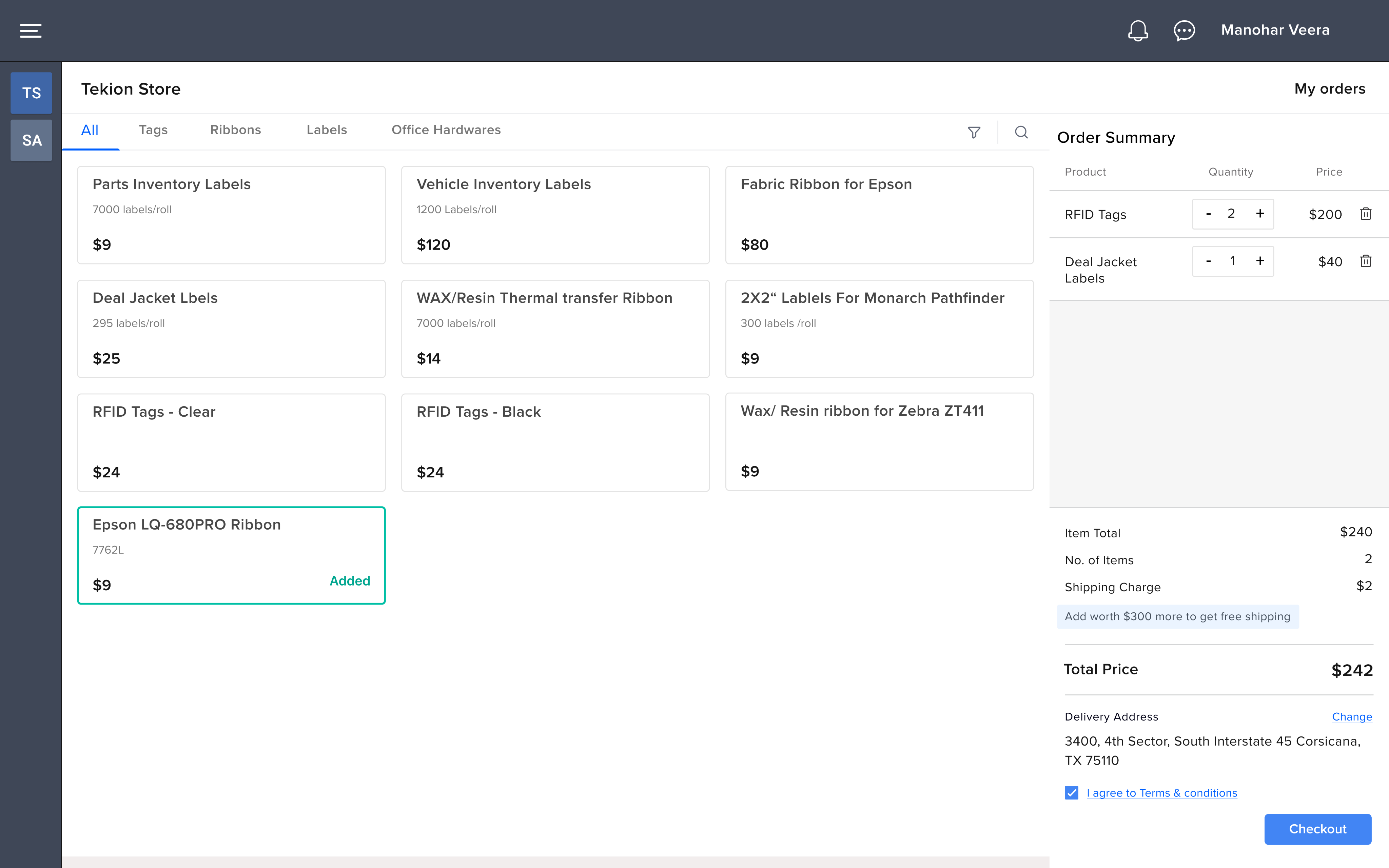
In this Project
About Tekion Corp
Tekion Corp is a cloud technology company headquartered in Pleasanton, California. It operates in the automotive retail industry, with its Asia-Pacific headquarters located in Bengaluru and a regional center in Chennai. The company also has operations in the UK, Canada, Germany, and France.Tekion builds cloud-native software for automotive dealerships — modernizing the backend operations that have historically run on legacy systems and manual processes.
What did I do
I replaced a manual time-consuming, multi-handoff paper process with an efficient digital solution.
I replaced a manual, multi-handoff paper process with a digital end-to-end flow. The core design work was about how that automation was exposed to users i.e. the single-screen ERP module, the information architecture, the 80/20 layout decision. Pure UX.
Existing
Slow Manual Labor Process

This Project
B2B Tech Integration.
Goal
Faster Automated System.
Business Problem
Order volumes were quietly outpacing the workflowsbuilt to handle them.
Automotive dealerships run on parts. When an inventory manager writes up a repair order, the parts department needs to locate, pull, and bill those components, fast and prepare the order slip. But at Tekion's dealership, order volumes were quietly outpacing the workflows built to handle them creating (a) billing inconsistencies, (b) fulfillment delays, and (c) orders that consistently fell behind schedule.
“Industry benchmarks put the average transaction time at a dealership parts counter at around 7 minutes” - Idealcomputersystems
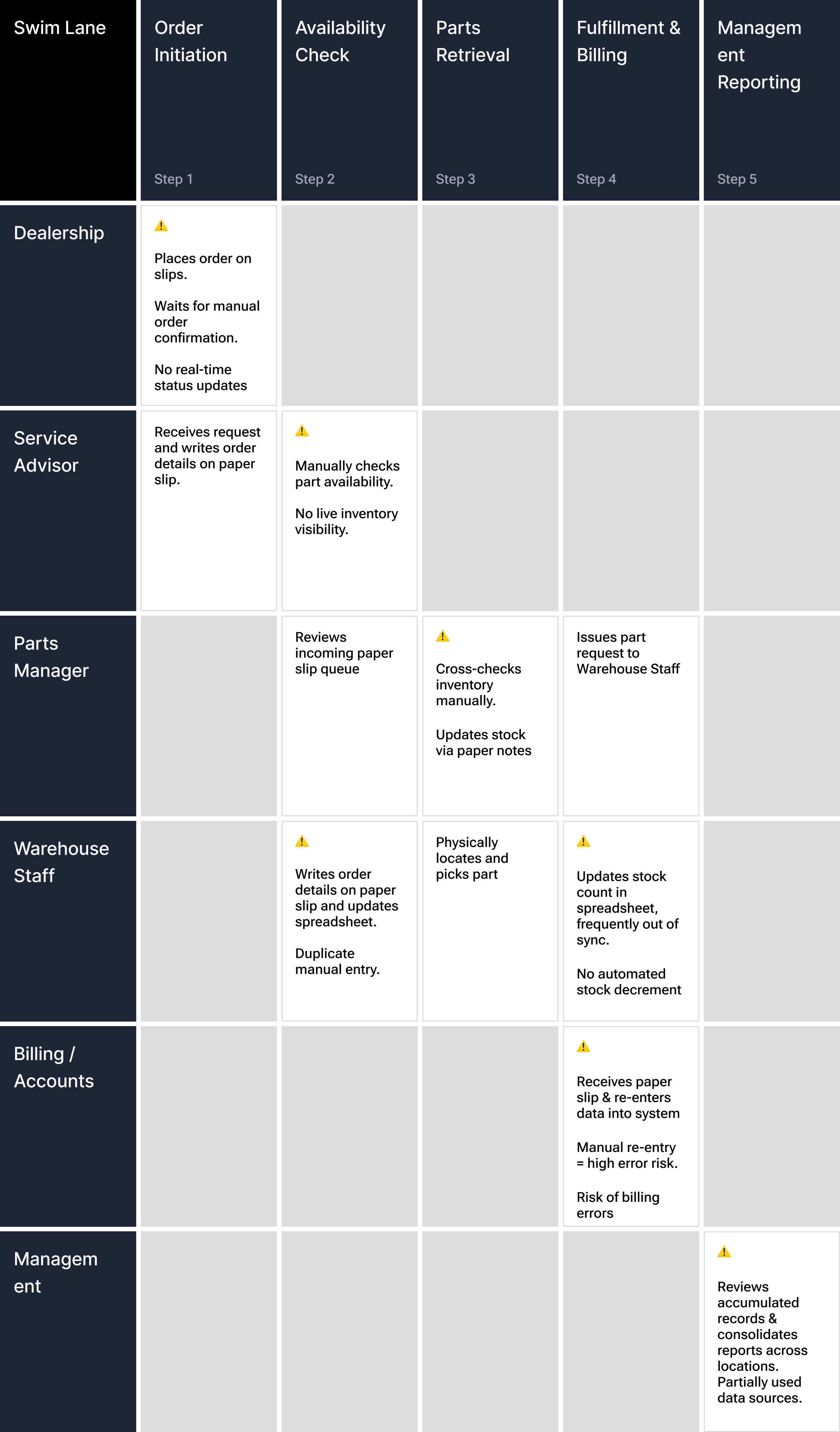
Every parts order passed through multiple hands (a) Service advisor confirming the request, (b) Parts manager cross-checking stock, (c) Warehouse worker locating and pulling the part, and (d) billing team re-entering the same data from scratch. Each handoff introduced a new opportunity for error. As order volumes grew, the model didn't scale, broke more visibly.
The business impact was concrete: (a) delayed fulfillment, (b) billing mismatches, and (c) eroding customer trust at the dealership level. For Tekion, whose platform promised to modernize automotive retail operations, the gap between their ambition and this operational reality was the problem worth solving.
Inventory management workflow Swim-lane diagram, created on Miro.
Key Challenges Identified
Limited Staff Handling Multiple Orders
As order volumes increased, manual and fragmented workflows struggled to keep pace. This led to slower processing times, missed timelines, and frequent delays in fulfilling customer orders.
Using Paper Slips to Manage Orders
Managers had to manually record part numbers, quantities, and prices, then reconcile them at the end of each day. This lack of digital traceability caused frequent mismatches in records and limited real-time visibility into parts availability and sales performance.
Resulting Business Impact
Frequent Billing Inefficiencies & Reduced # of orders completed.
Disconnected systems and manual interventions caused billing errors and inconsistencies. These issues resulted in delayed invoices, revenue leakage, and increased back-and-forth with customers.
Decreased Customer Experience (CX)
Order delays and billing problems directly impacted customer trust and satisfaction. Clients faced uncertainty and friction throughout the process, ultimately weakening long-term relationships and business growth.
Qualitative Research
We spoke with 3 inventory managers and 1 implementation manager
I joined a cross-functional team with a product manager and engineer, and our first move was getting close to the people managing inventory. We spoke with 3 inventory managers and 1 implementation manager, the people running shifts, processing orders, and absorbing the cost of every error.
What emerged as the key insight was a five-stage workflow where every role was working in isolation:
Stage
Role
Pain
Order Initiation
Dealership
Paper slips, no confirmation, no status
Availability Check
Parts Manager
Manual cross-check, no live stock visibility
Parts Retrieval
Warehouse Staff
Duplicate entry into spreadsheets
Fulfillment & Billing
Parts Manager
Manual cross-check, no live stock visibility
Reporting
Management
Consolidated manually, always lagging
"It takes too much time to complete an order."
"During bulk orders, we're swamped and some get delayed."
The pattern was the same at every stage: (a) data entered by hand on slips, (b) no single source of truth, and (c) reconciliation happening at the end of the day when it was already too late to catch problems.
The Problem Statement
HMW enable automotive inventory managers to place bulk parts orders with OEM suppliers, with fewer staff, fewer errors, and in significantly less time?
This wasn't just an internal workflow issue. Dealerships don't manufacture parts, they source them from OEM suppliers. That meant any real solution required a B2B integration layer connecting the dealership's ordering system directly to the supplier's inventory. Without it, we could digitize the slip, but we could never close the loop.
Solution
The core design challenge was consolidation: One Screen, End-to-End
The core design challenge was consolidation. Previous workflows required multiple handoffs across roles and systems. The ERP module needed to collapse that into a single interface without overwhelming the user.
My goal was to enable parts discovery, selection, bulk ordering, and checkout without any page redirects.
I based the layout on an 80/20 split i.e. 80% product listing, 20% persistent cart and my rationale was that inventory managers need to quickly cross-reference available parts against what they're ordering, especially under shift pressure. This mirrors the pattern used by high-throughput commercial ordering interfaces, where the catalogue and basket must coexist.
The information architecture kept individual components lean: only decision-relevant data per part (availability, quantity, price), no descriptions that slow scanning. The user's job is to recognize, not read.
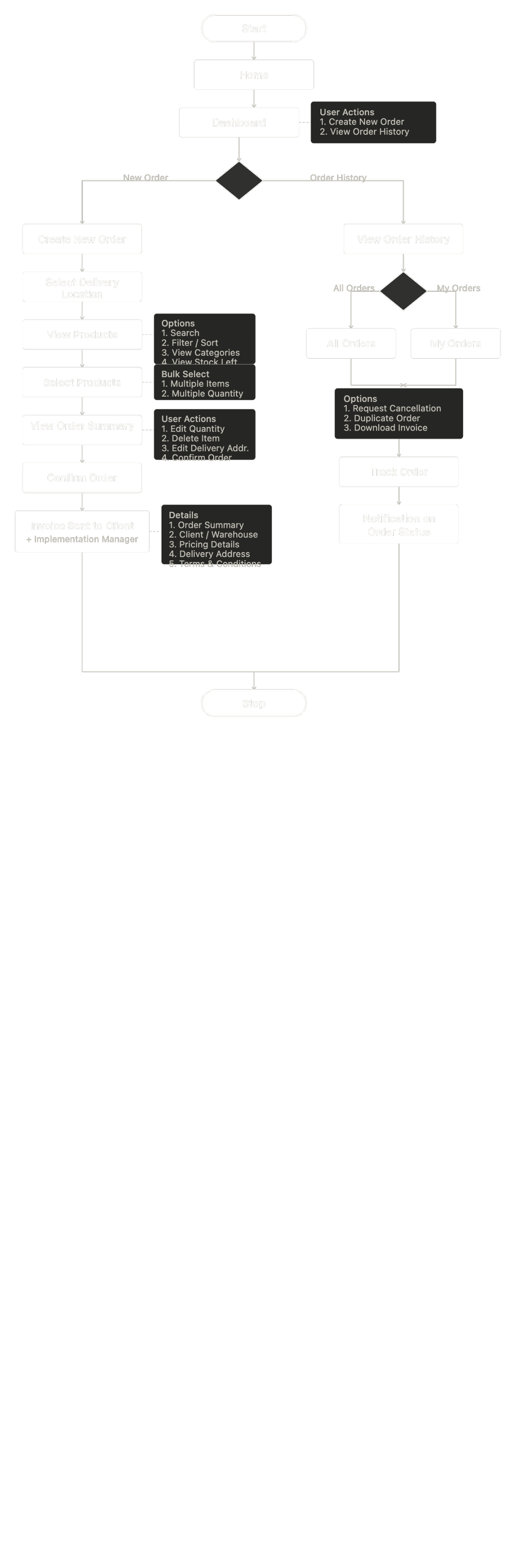
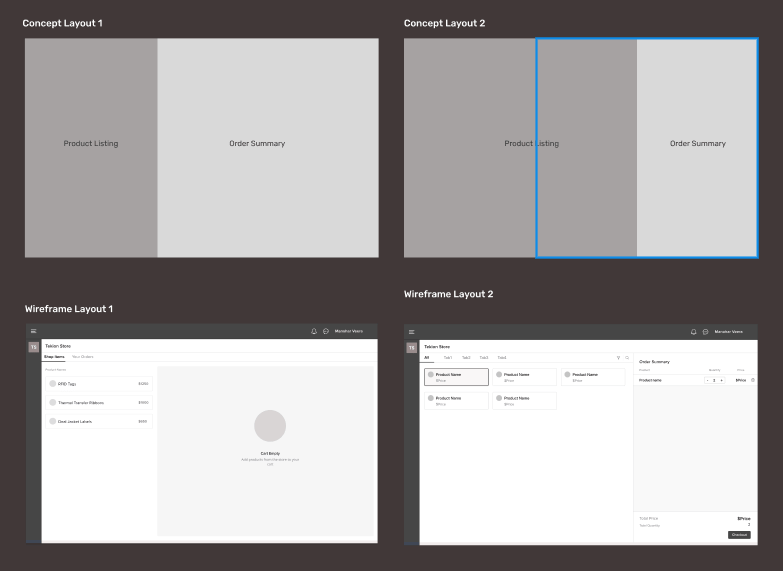
Fig. Complex tool wrapped in one single interface
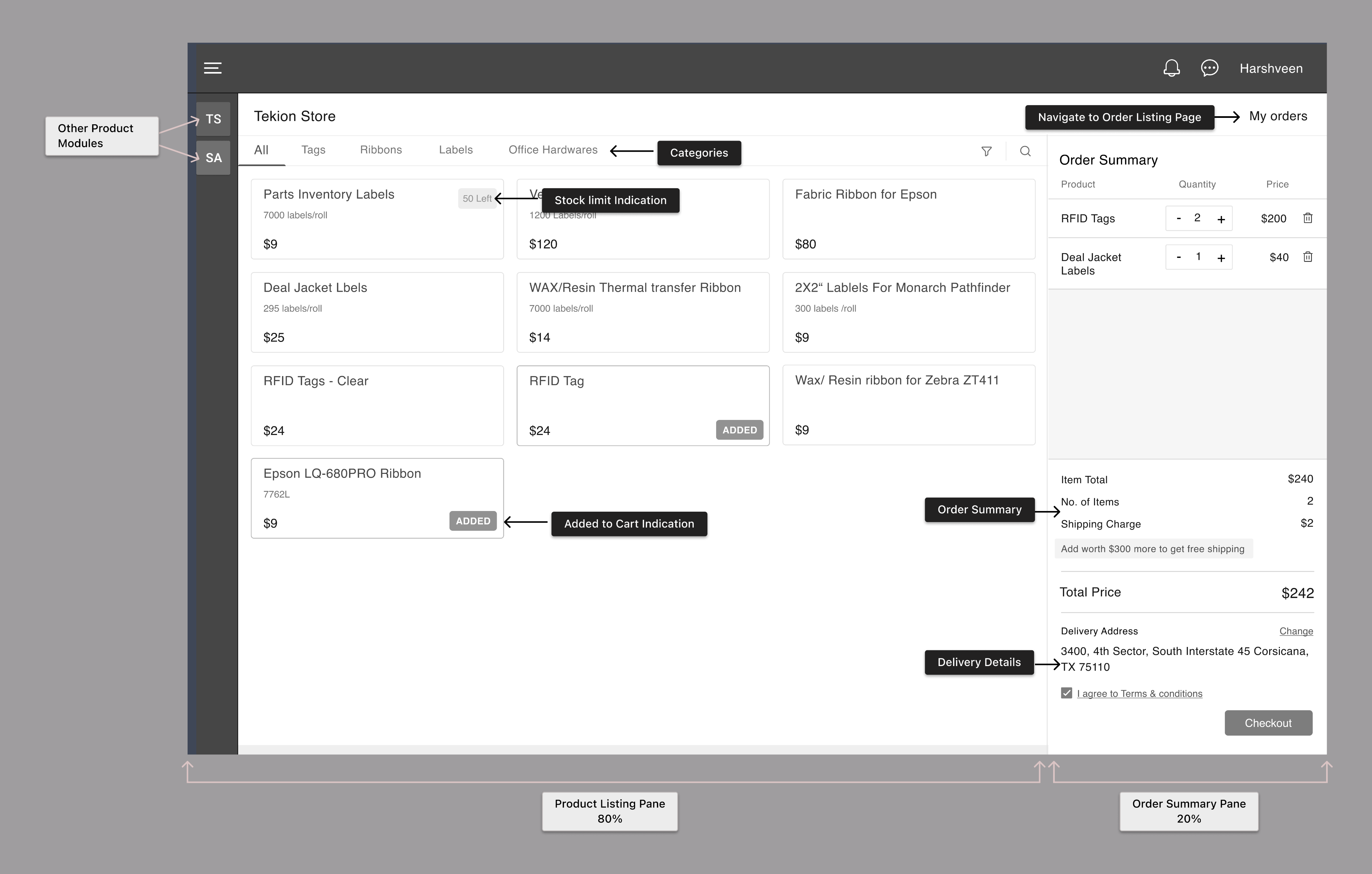
Fig. Layout Breakdown
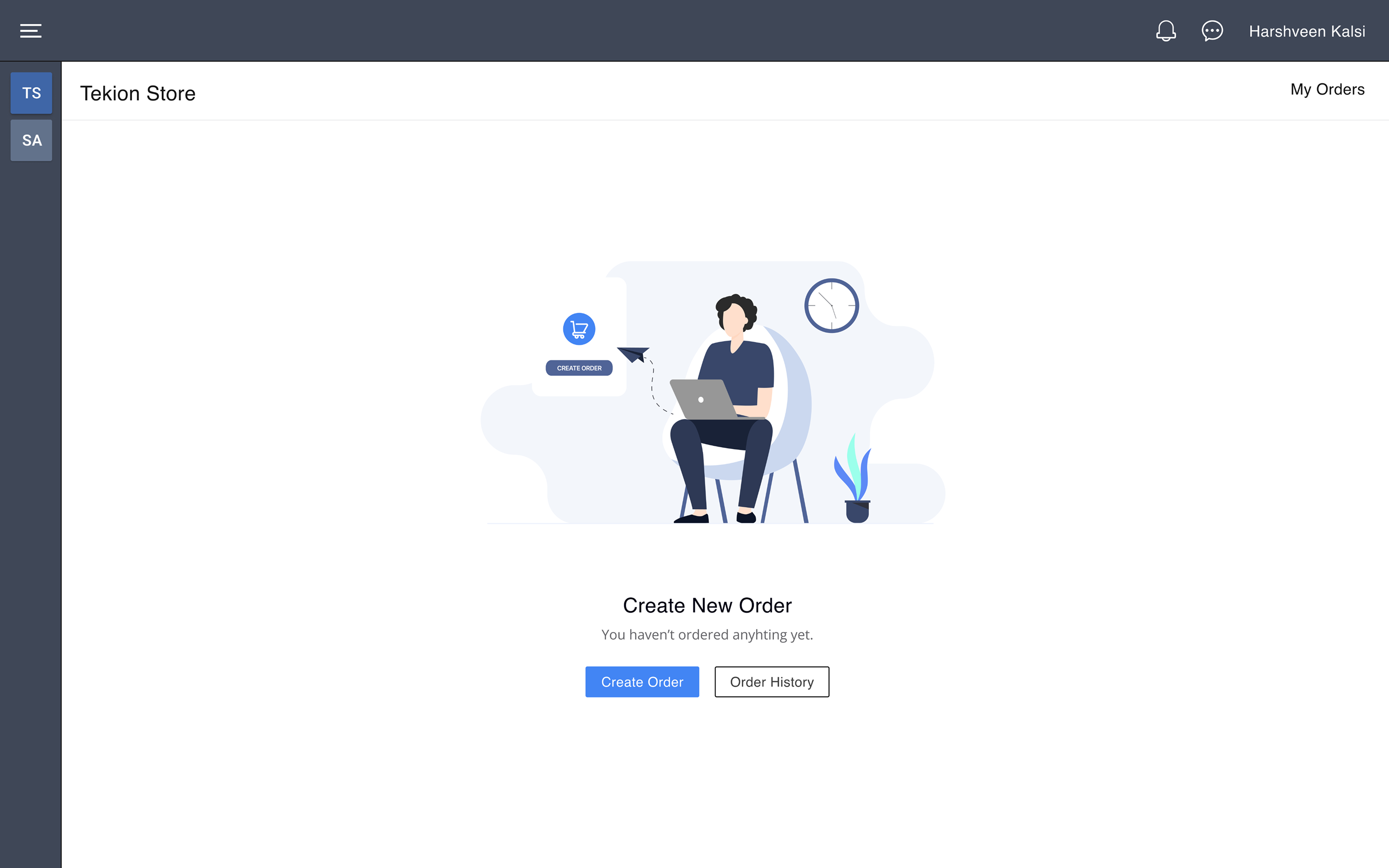
Fig. FTUX
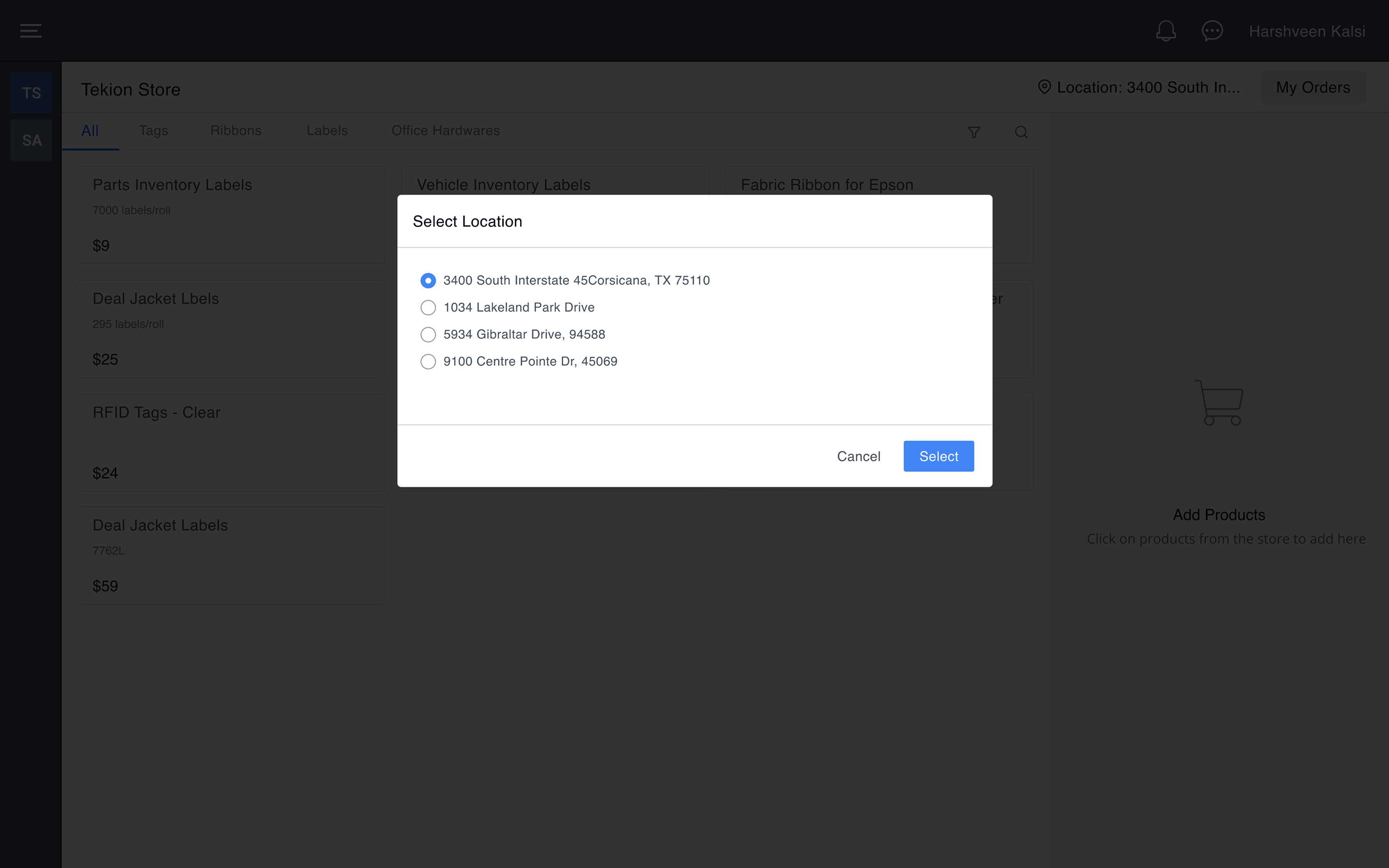
Fig. Delivery Preference Configuration
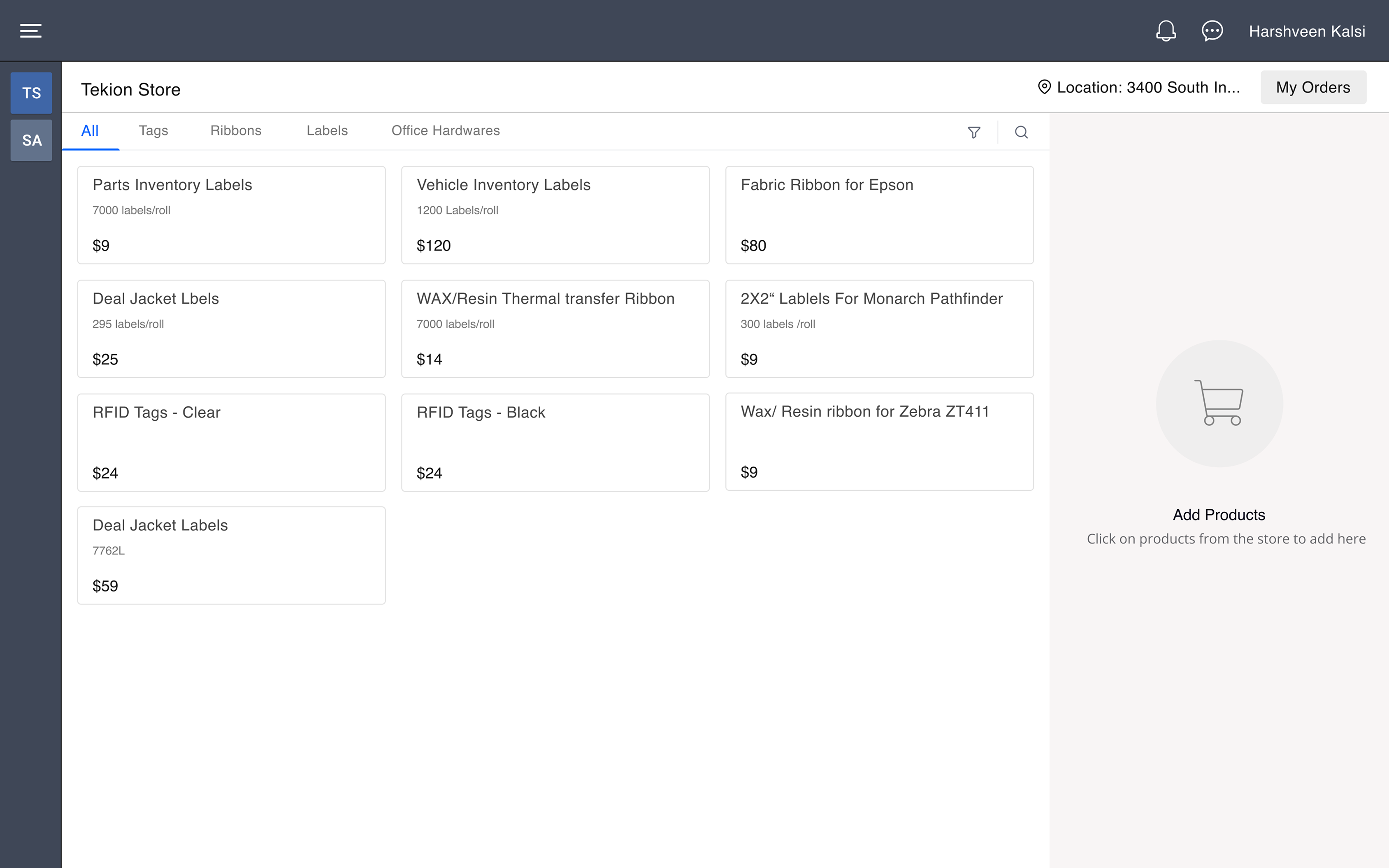
Fig. FTUX Parts Selector
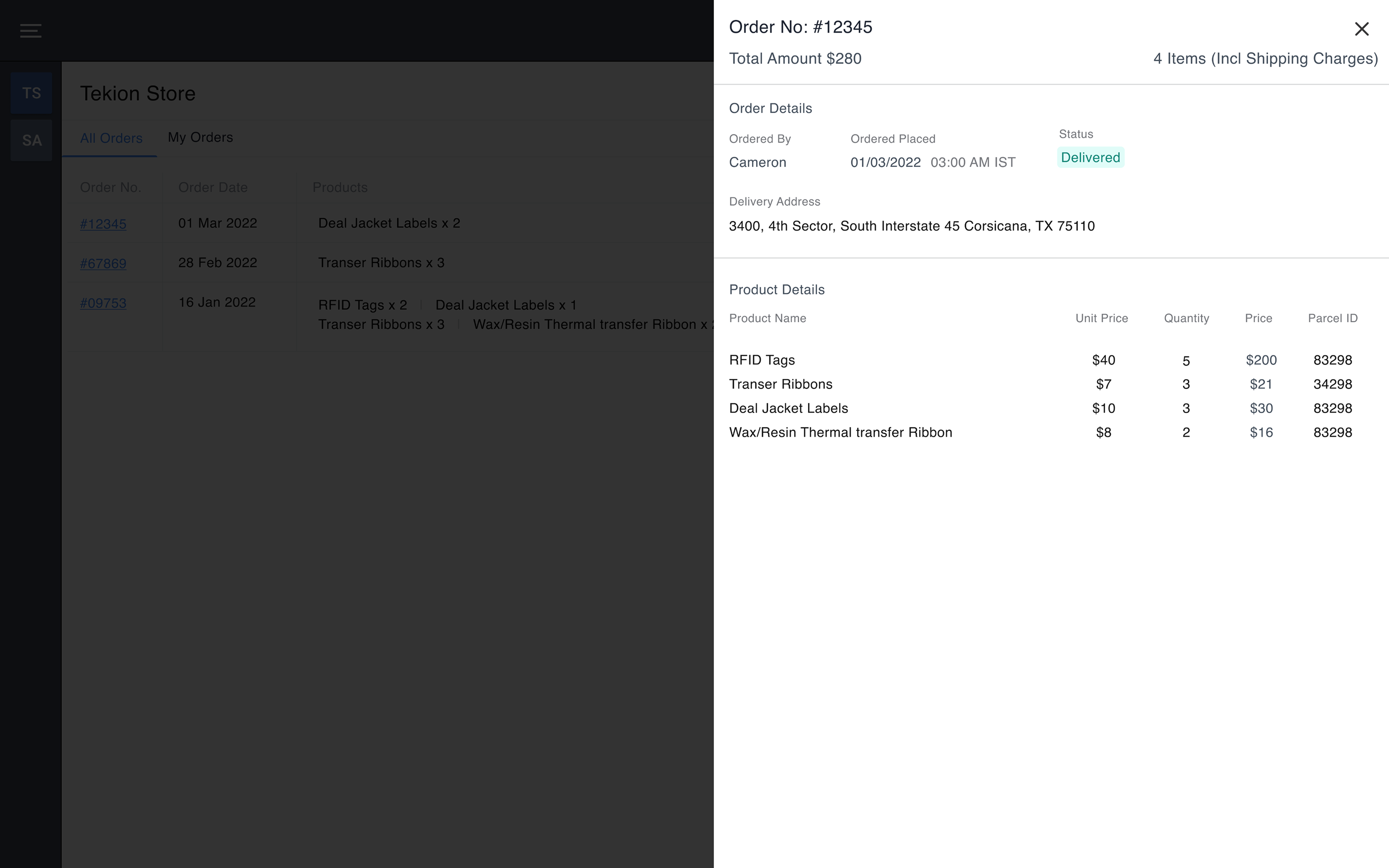
Fig. Shipment Tracking
Impact
Measuring success
Early in the project, while scoping requirements with the PM, I pushed to define how we'd measure success, not just whether the product shipped, but whether it worked. The metric we aligned on: Setup Completion Time.Few weeks after implementation when we reverted back to the workforce to check if there were any gaps in the solution or if something needed to be fixed, we got reviews that told us that the project was a success. The team was happy that the tool now helped them check inventory, manage stock and generate order slips much faster than before.Before: ~10 minutes per order, manually.After: ~2 minutes per order, with the ERP tool.Delta: ≈80% improvement
Before
After
Paper slips, manual entry
ERP module, end-to-end digital
No real-time stock visibility
Live inventory across locations
Fragmented role-by-role handoffs
Centralized system, role-based access
~10 min per order
~2 min per order
Thank you for reading.
If you want to brainstorm on your product to move the needle on a meaningful metric, I am one call away from the conversation that matters.
Harshveen’s Product Playbook